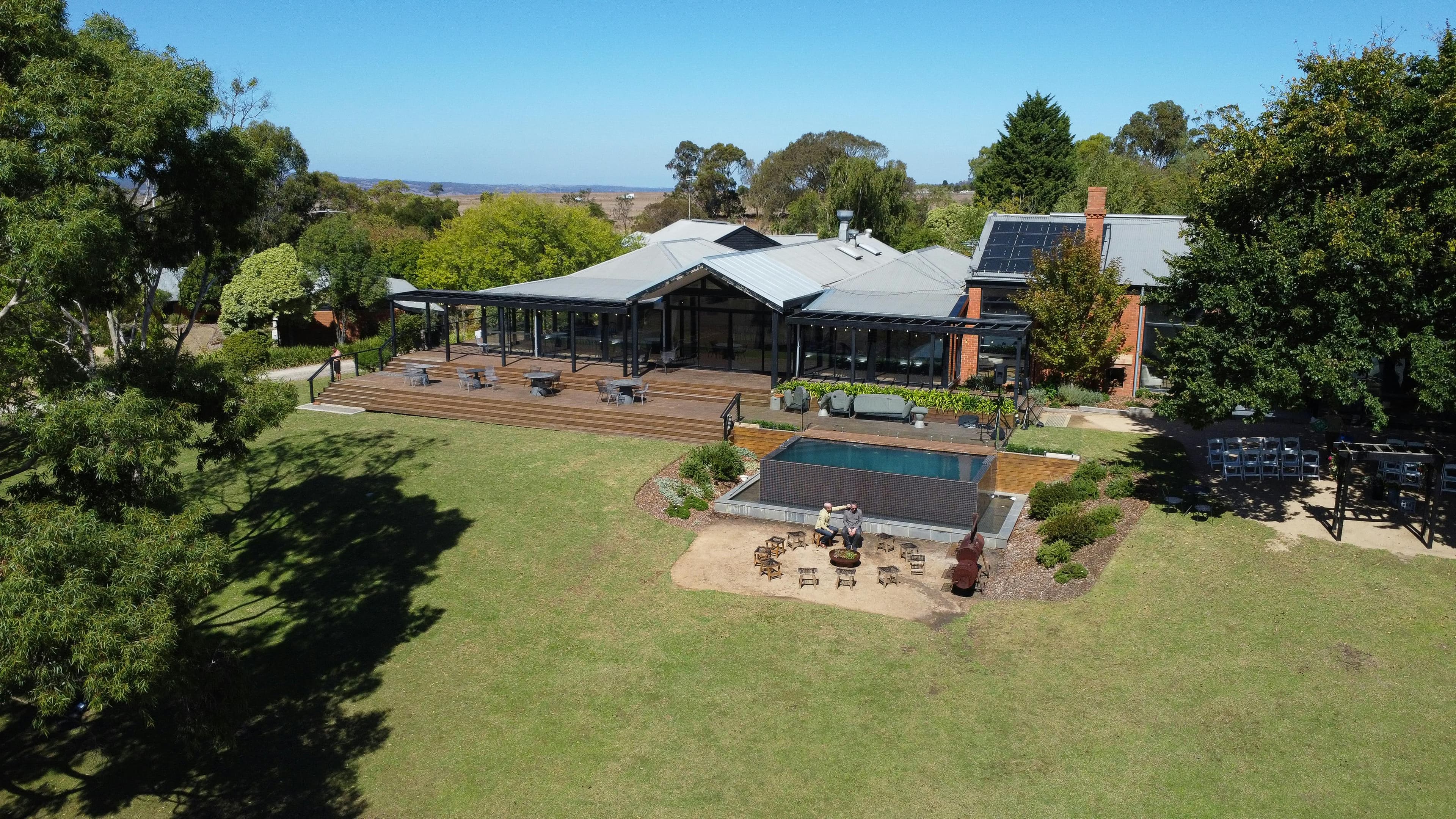
2026 changed the rules of owning a holiday home. It didn't change why we want one.

Plenty of families know the January routine. Open a booking app, find a house near the same beach, pay peak rates for a fortnight, hand the keys back. Ten summers later, you know that stretch of coast by heart and own none of it.
The alternative has always been to buy the whole house. This year, that decision got harder.
What changed in 2026
Prices turned. Cotality's national Home Value Index fell 0.9% in August, the fifth monthly fall in a row, leaving values 3.6% below the March peak. Through winter, 93% of capital city suburbs recorded a decline. Sales are running well below last year and more homes are sitting on the market, so buyers have more choice but less confidence to commit.
Borrowing got dearer. The Reserve Bank lifted the cash rate three times earlier this year, to 4.35%. Inflation is still above the 2 to 3% target band, and the next decision is due on 29 September.
Tax settings moved. Two changes matter for anyone weighing a holiday home they would also let out.
• For established homes bought after 7:30pm on 12 May 2026, rental losses from 1 July 2027 can only be offset against residential property income, not salary. Eligible new builds are exempt. Separately, the 50% capital gains tax discount is being replaced with indexation and a 30% minimum tax on gains that accrue from 1 July 2027.
• In May, the ATO finalised new guidance treating a holiday home that is also used for personal holidays as a "leisure facility". Ownership costs such as interest, rates, land tax and insurance are denied unless the home is mainly used to earn rent, and keeping the peak holidays free for family counts against you.
Put simply, the holiday home that quietly paid its way through letting and deductions is much harder to make work.
The tax summaries above draw on published Treasury and ATO material. They are general information, not advice for your circumstances.
Holding costs kept climbing. Home insurance premiums have risen 51% in five years, according to Finity, and quotes across the five largest capitals rose almost 15% in the year to June 2026. Holiday homes carry an extra catch: many policies reduce or void cover once a home has been empty for more than 60 days in a row.
What didn't change
The want. Australians spent $29.7 billion on overnight trips at home in the March quarter of 2026, and accommodation was the largest share of it. More than a third of employed Australians now regularly work from home, which makes a longer stretch on the coast easier to fit around a job.
The old problem with owning outright hasn't gone away either. Around 2 million Australians own a property other than the one they live in, and in popular coastal towns a large share of homes sit empty for much of the year. After the 2021 Census, one Victorian coastal mayor put it at 60 to 70% of houses in some of her towns. Owning all of a holiday home means carrying all 365 days to enjoy a handful of them.
The third way
Between buying all of it and renting forever sits managed co-ownership. It is an established category overseas: Pacaso has operated in the US since 2020, and Prello and MYNE do similar work in Europe. Shared ownership is becoming normal here too. CommBank reports that 60% of its first home buyers now purchase with someone else.
Here is how Copay applies the idea to Australian holiday homes.
• One specific home. Each home is bought by its own fixed unit trust, with a company as trustee. Owners hold units in that trust, recorded on the trust's unit register.
• The part people ask about. The trustee company is the owner on the land title, not you. You hold units in the trust that owns the home. That is a long-standing way Australians hold property, and it is what lets your share be valued and transferred cleanly.
• A small group, bought individually. No more than eight owners per home. You buy your share on your own, so there are no friends to organise and no shared mortgage.
• Use that is written down. How nights are allocated, including a fair rotation of peak and school holiday periods, is set out in the co-ownership agreement before anyone signs.
• Fully managed. Cleaning, linen, maintenance, trades, insurance and rates are handled for you, funded through one monthly levy.
• Costs shown first. The levy, the reserve contribution and our structuring fee each appear as their own line before you commit, and we walk you through the stamp duty and land tax position for the home.
• A defined way out. The exit pathway is in the agreement from day one. We administer the transfer. We don't run a market, we don't set the price, and we can't promise how long a sale will take.
"Isn't this just buying holiday time in a place someone else owns?" No. The difference is what you hold: a real share of one home, through its own trust, that you can use, pass on or sell.
Why it suits this moment
It is sized to the time you will actually spend there, not to 365 days. It is built for owners' own use, so its value sits in the time you spend there rather than in a tax outcome. It takes the second job out of owning a second home. And it is transparent by design: what you own, what you pay and how you exit, set out before you ask.
It isn't for everyone. If you want the house most weekends, or you want to let it out, buying the whole home is the better fit. And because a share is a share of a real home, its value moves with the property market, in either direction. If what you want is a place your family keeps returning to, without running it yourself, it is worth a closer look.
Where we're starting
Copay is demand-led. We don't buy a home and then go looking for owners; registrations tell us where to buy next. Our first focus is Noosa, about two hours north of Brisbane.
If that is the stretch of coast you keep coming back to, register your interest at copay.au/noosa and tell us what you would want in a home there. Or message me directly. I'm glad to take the sceptical questions.
By Himanshu Arora, Director of Copay. Copay offers managed co-ownership of Australian holiday homes, so read this knowing I have a stake in the answer.
Sources
• Cotality Home Value Index, August 2026 (released 1 September 2026), via PropertyUpdate and Property Investment Professionals summaries
• Reserve Bank of Australia, cash rate target; Aussie, "What experts predict for the RBA's September 2026 decision"; Dux Properties, RBA update, September 2026
• Australian Taxation Office, "Reforming negative gearing and capital gains tax" (June 2026); William Buck, Federal Budget 2026 analysis
• ATO, Taxation Ruling TR 2026/1 and PCG 2026/3 (May 2026); Sladen Legal, "Holiday homes after TR 2026/1"
• Finity data via ABC News (23 February 2026); Compare the Market data via Insurance Business (16 July 2026); Cover Club, Queensland home insurance (June 2026)
• Tourism Research Australia, Domestic Tourism Statistics, March quarter 2026, via Business News Australia
• Australian Bureau of Statistics, Working arrangements, August 2025
• The Conversation, "Look where Australia's '1 million empty homes' are"; ABC News, 20 July 2022
• Haute Living (Pacaso, launched late 2020); CommBank newsroom, March 2026
Thinking about co-ownership?
Browse available homes and see how a Copay share works in practice.
Explore Assets